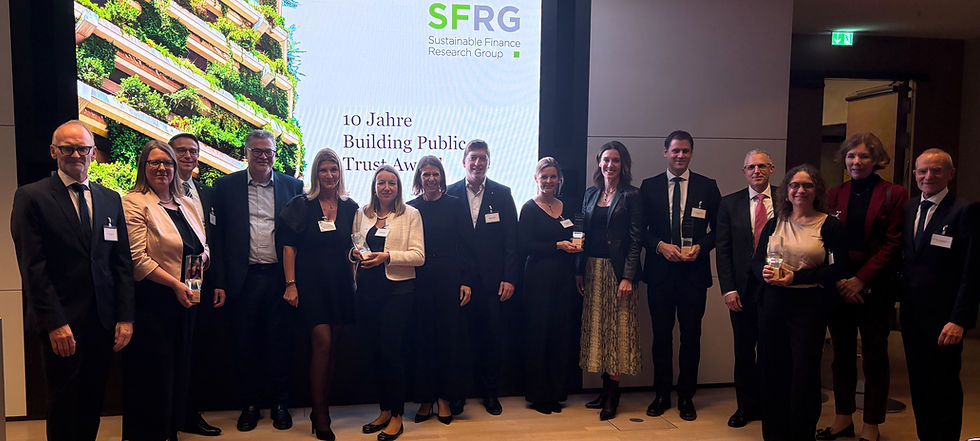
B U I L D I N G P U B L I C T R U S T
A W A R D
2025
A panel of experts from business, academia, investment, supervisory boards, and rating agencies once again evaluated the sustainability reporting of leading German companies. The 2025 assessment focused on DAX, MDAX, and for the first time, SDAX and major financial institutions. The analysis concentrated on companies that have already aligned their reporting fully with the European Sustainability Reporting Standards (ESRS) under the Corporate Sustainability Reporting Directive (CSRD).
Background
With the CSRD and ESRS now formally in effect, 2025 marks a decisive year for harmonized sustainability reporting across Europe. Despite delays in transposing the CSRD into national law and the EU’s “Omnibus Package” reducing some reporting obligations, many companies particularly in the DAX have already implemented comprehensive ESRS-compliant reporting frameworks. The study, led by Prof. Dr. Alexander Bassen and the Sustainable Finance Research Group at the University of Hamburg, evaluated the quality and consistency of these disclosures in four key areas:
-
Double Materiality Analysis (DMA)
-
Impacts, Risks, and Opportunities (IROs)
-
Climate Change (ESRS E1)
-
Assurance and other topics
Across all indices, the double materiality analysis has matured significantly, with most companies demonstrating transparent and systematic approaches. However, smaller firms and some financial institutions still treat it as a compliance exercise rather than a strategic tool. Reporting on impacts, risks, and opportunities is increasingly structured, though financial quantification remains limited. In regards to climate disclosure, many companies now publish transition plans and science-based targets, but Scope 3 data and the integration of sustainability aspects into financial reporting remain key challenges. The introduction of mandatory sustainability assurance has accelerated quality improvements, with some companies moving beyond “limited assurance” toward "reasonable assurance" for specific indicators.
Further Links:
-
Information on the Award 2025